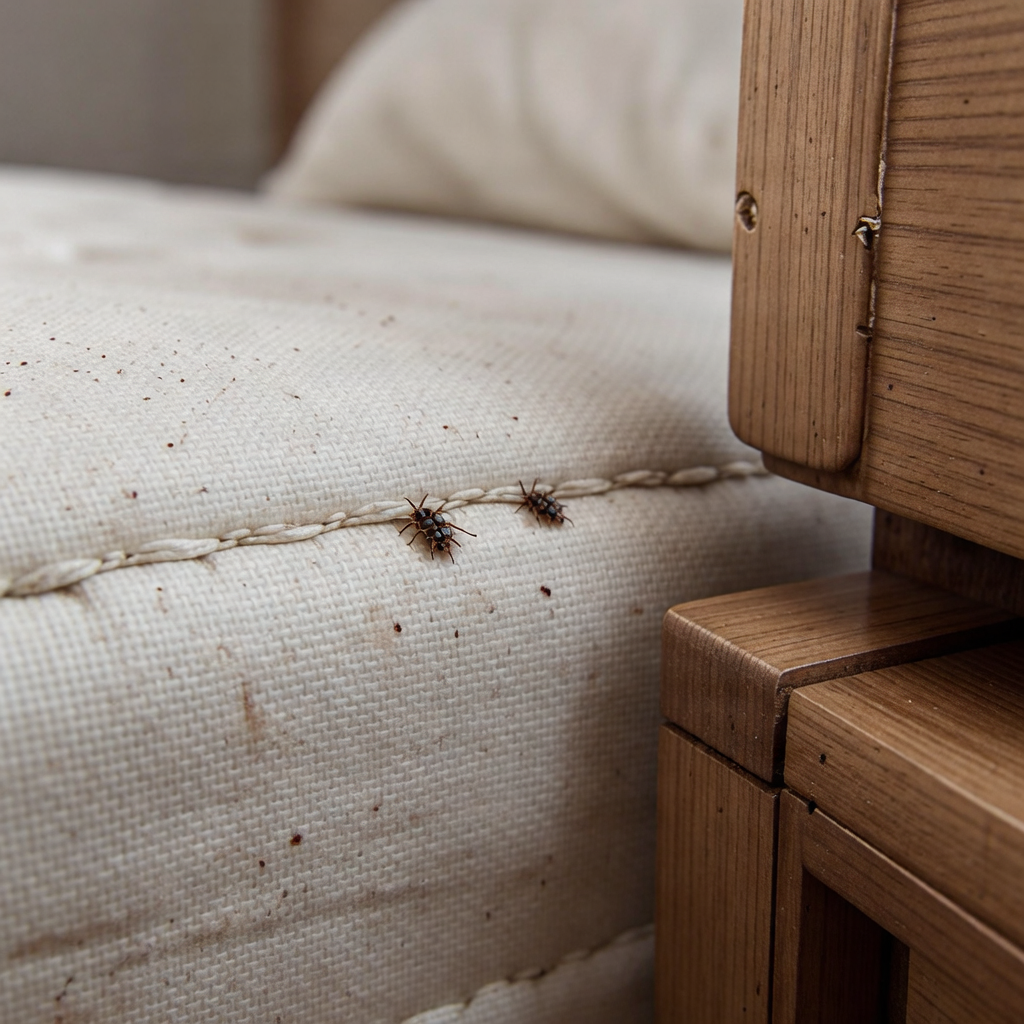
Bed bugs are master hitchhikers that thrive in tiny, difficult-to-reach spaces. Because their flattened bodies allow them to slip into the narrowest gaps, early detection requires inspecting these ten common harborages.
The primary harboring area. Tight folds, tufts, and piping on mattresses offer immediate protection right next to their hosts.
Cracks in wooden joints, screw holes, support slats, and hollow metal frame tubes provide secure hiding spots near the floor.
Often mounted to walls, the dark space behind headboards, deep carvings, and upholstery seams are hotbeds for activity.
Upholstered furniture in living areas contains deep seams, tufts, dust ruffles, and skirts where bugs comfortably nest.
The underside of tables, drawer tracks, slide-outs, and joints inside nightstands or dressers are safe harborages.
Upper pleats, heavy hems, curtain rods, and wall attachments offer vertical nesting areas that are hard to reach.
Small hairline cracks in plaster, damaged wallpaper, floorboards, and paneling crevices form highly hidden harborages.
The small spaces surrounding wall sockets, light switches, and inside outlet plates provide warm, hidden paths.
The gap between baseboards and flooring, especially under carpet tack strips, is a classic path for room transition.
Underneath zippers, inside pockets, seams of suitcases, and stored cardboard boxes under beds or in closets.